About Chris
A personal understanding of pain, movement and the need to be met as a whole person.
A personal understanding of pain
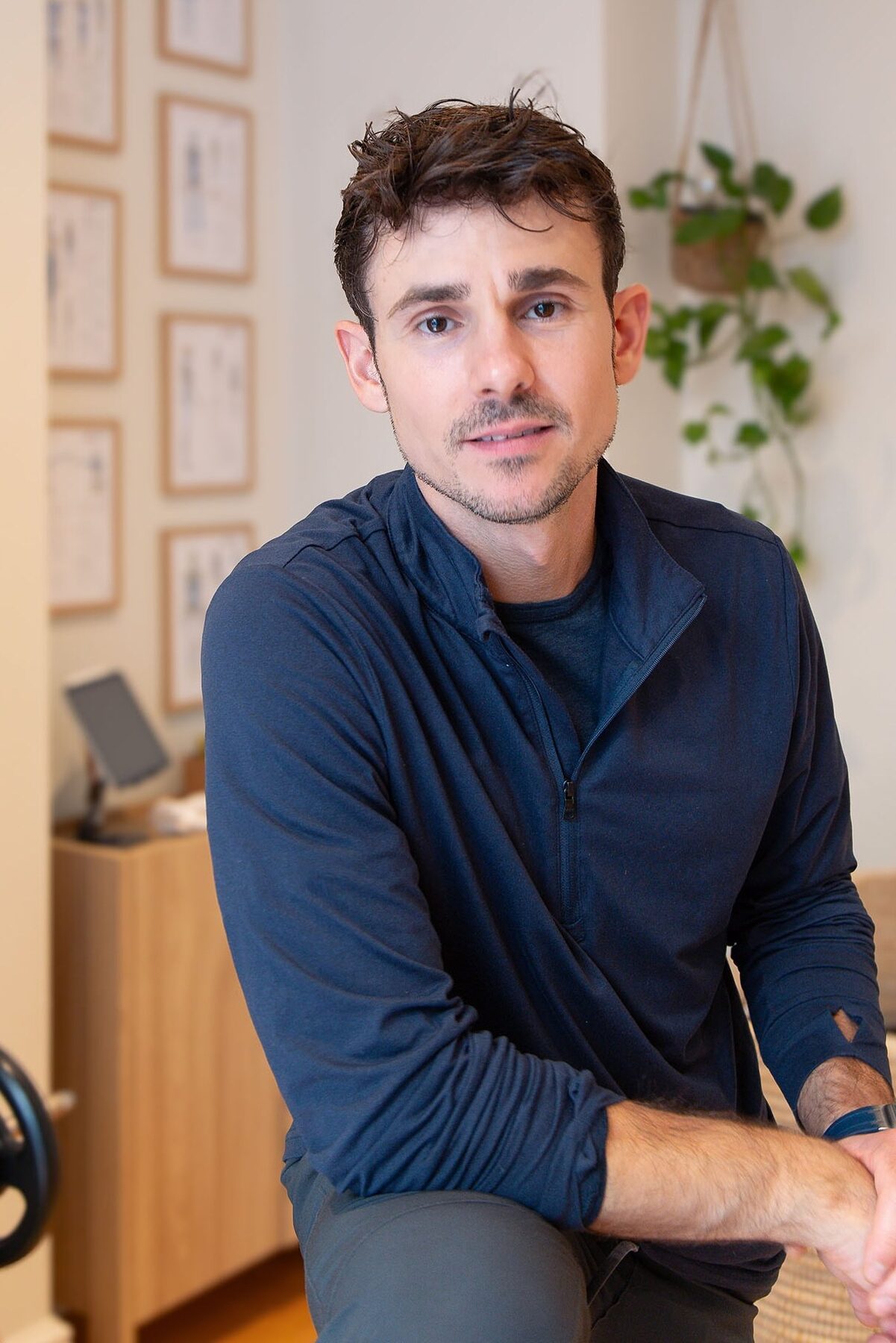
Chris Darmanin is an Anatomy Trains Structural Integrator whose relationship with the body began not only through movement, but through the necessity of trying to understand his own experience of pain.
Pain became a significant part of Chris's life quite early on. Before beginning his professional ballet training, he had already experienced a spinal injury and herniated disc as a teenager. At ballet school, this was followed by other repetitive strain injuries. When surgery was proposed, the possible consequences of not proceeding were presented to him in a way that instilled considerable fear. That fear then became part of how he was persuaded not only to undergo the original operation, but to agree to several additional procedures around the same issue, presented as precautions worth taking “just in case.”
These surgeries brought with them the additional pain and complexity of ongoing recovery. With the understanding he has now, Chris can see that questions around neuromuscular conditioning, awareness and the wider organisation of his body were not being sufficiently asked or investigated, and that other possibilities might have been explored before resorting to surgery.
The general experience was one of moving between practitioners and approaches that remained narrowly focused on the area of pain. The options offered increasingly centred around further procedures, injections and attempts to treat the affected structure, without helping him understand why the problem had developed in the first place—why in that part of his body and not another; why in him and not in another classmate undergoing exactly the same training.
From movement into awareness
A couple of teachers at ballet school began pointing Chris towards sensation, proprioception and a more conscious relationship with his body. His introduction to the Franklin Method and the use of imagery opened an early understanding that movement could be approached through internal experience rather than only through the achievement of an external form.
It was during his ballet training and career that Chris discovered GYROTONIC®, initially in the hope of improving his mobility. Through it, he began to experience mornings free from the pain that had accompanied him for years. The effect was significant enough that he eventually moved into teaching the method himself, which he continued to do for many years.
Over time, however, he became increasingly interested in what determines whether a particular movement is truly of service to the person doing it. The teaching of any fixed technique can easily become organised around an established idea of right and wrong—a correct way of performing the movement towards which every person is expected to work. While a method may have great value, the individuality of the person can become secondary to the successful execution of the technique.
Chris became less interested in simply applying a movement system and more interested in understanding what might be most functionally efficient: both in relation to human anatomy more generally and to the particular organisation, history and needs of the individual in front of him.
Finding Anatomy Trains
A framework precise enough to guide the work without closing down inquiry.
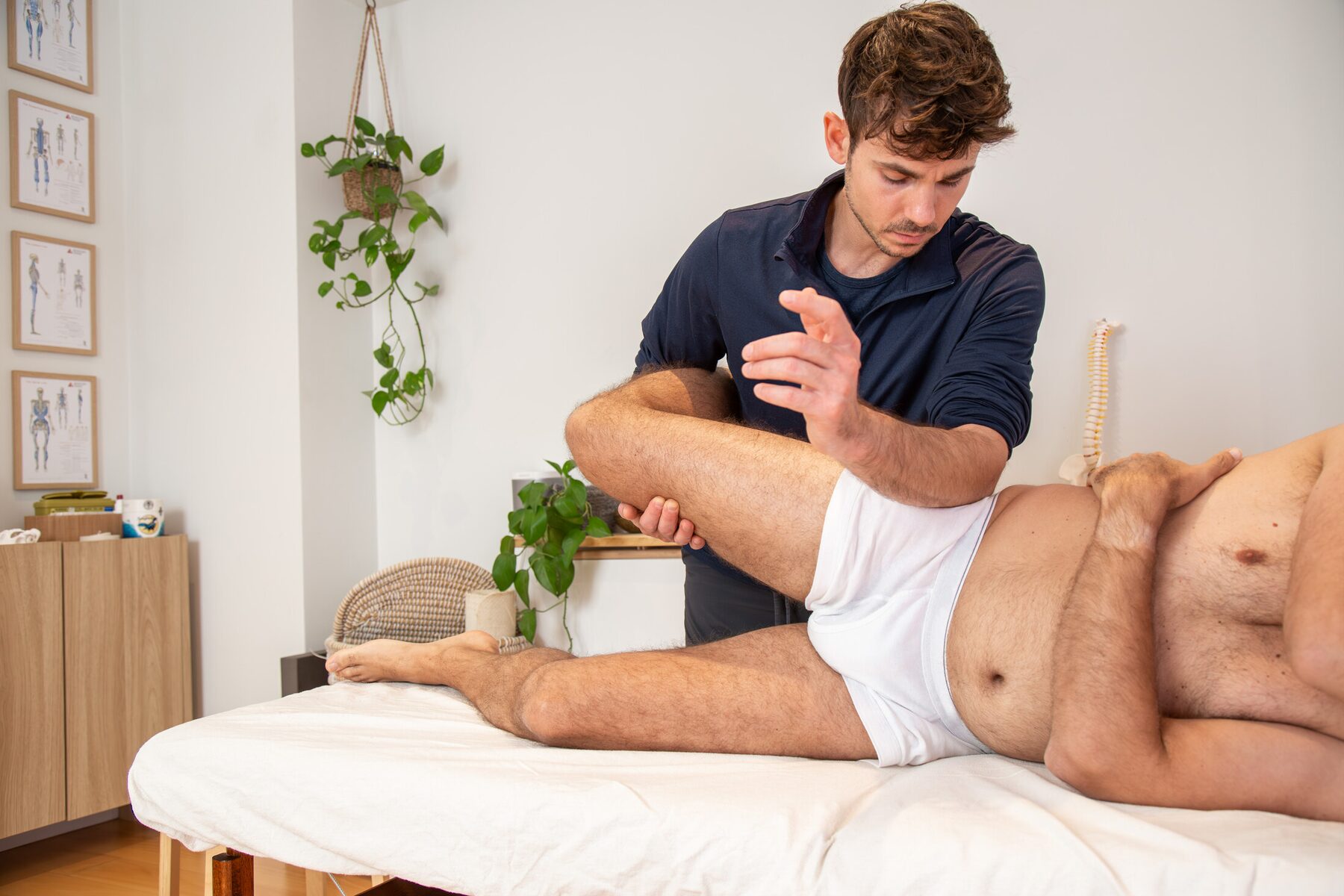
What drew Chris towards Anatomy Trains was its combination of anatomical specificity and openness. Through BodyReading and the Anatomy Trains model, he found a way of observing structural and postural patterns so that movement and hands-on work could be chosen in service of the individual, rather than asking the individual to conform to the method.
Anatomy Trains Structural Integration offered a framework precise enough to guide the work without closing down inquiry. It considers how the body has organised itself as a whole, how different regions relate through the fascial network and how those relationships may be influencing posture, movement and the distribution of load.
Chris trained with Tom Myers, the originator of Anatomy Trains, as well as Michael Watson and Julie Hammond. Their teaching has contributed to a way of working grounded in detailed anatomy and biomechanics, while remaining open to what is unique about each person and what becomes apparent through the process itself.
For Chris, the value of this approach lies partly in its refusal to reduce a person to a diagnosis, a painful area or an externally prescribed idea of correct posture. The intention is not to impose a shape upon the body, but to explore what might allow it to move towards greater balance, adaptability and a more harmonious state of being.
A process of collaboration
Chris's way of working is based upon collaboration. Every stage of the process requires the willingness of the person he is working with; the work must also feel right to them, and nothing is ever imposed.
He aims to create a space in which a person's nervous system can settle and down-regulate through feeling safe, listened to and involved in what is happening. He explains the work in ways that can be understood and experienced, without relying unnecessarily on anatomical or technical language in a way that dominates the conversation or places his own knowledge above the person's relationship with their body.
When someone has lived with pain for a long time, one of the first openings Chris looks for is an experience that the affected area has the potential to feel different. This does not require the pain to disappear completely; even an initial shift can begin to challenge the feeling of being stuck with the problem exactly as it is, which can often feel as burdensome as the pain itself.
When the belief that nothing can change begins to loosen, fear begins to loosen with it. The person's relationship with pain begins to change, and from there it becomes possible to explore—together—how much more ease, support and freedom may be available.
From understanding into knowing
We live in a world that requires us to exist predominantly in our heads, surrounded by information about what is right, what is wrong and how something should be done. Within that environment, curiosity can easily be replaced by another set of instructions to follow.
For Chris, curiosity lies at the basis of anything brought into the world that carries deep and sincere value. His intention is not simply to give someone another conceptual understanding of their body, but to help them develop an experientially vivid relationship with it: to use concepts and intellectual understanding to arrive at intimate knowing.
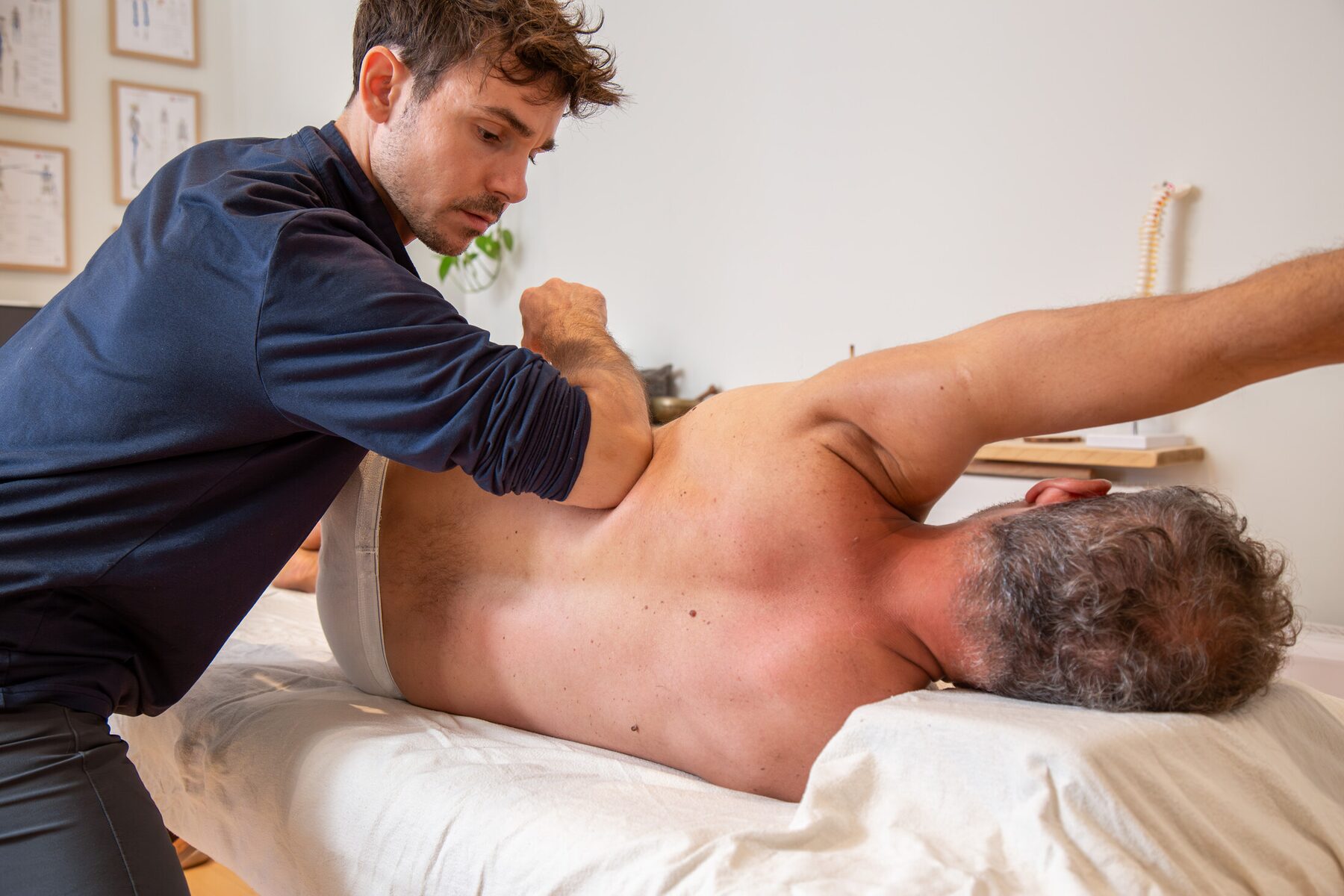
Structural Integration can create an opportunity to reconnect with sensation, to recognise patterns that had previously remained outside awareness and to experience different possibilities for support, coordination and movement. From this, people may experience not only physical change, but a greater sense of grounding, clarity and calm.
What continues to excite Chris most is how change within the structure may resonate beyond it: into a person's intimate relationship with their own body, and into the way they meet other people and the world around them. For him, working with the body as a whole must also mean recognising the whole person within it—someone with their own history, experience and capacity to participate in discovering what might become possible.