The Process
Assessment and intention
The process begins with observation and conversation.
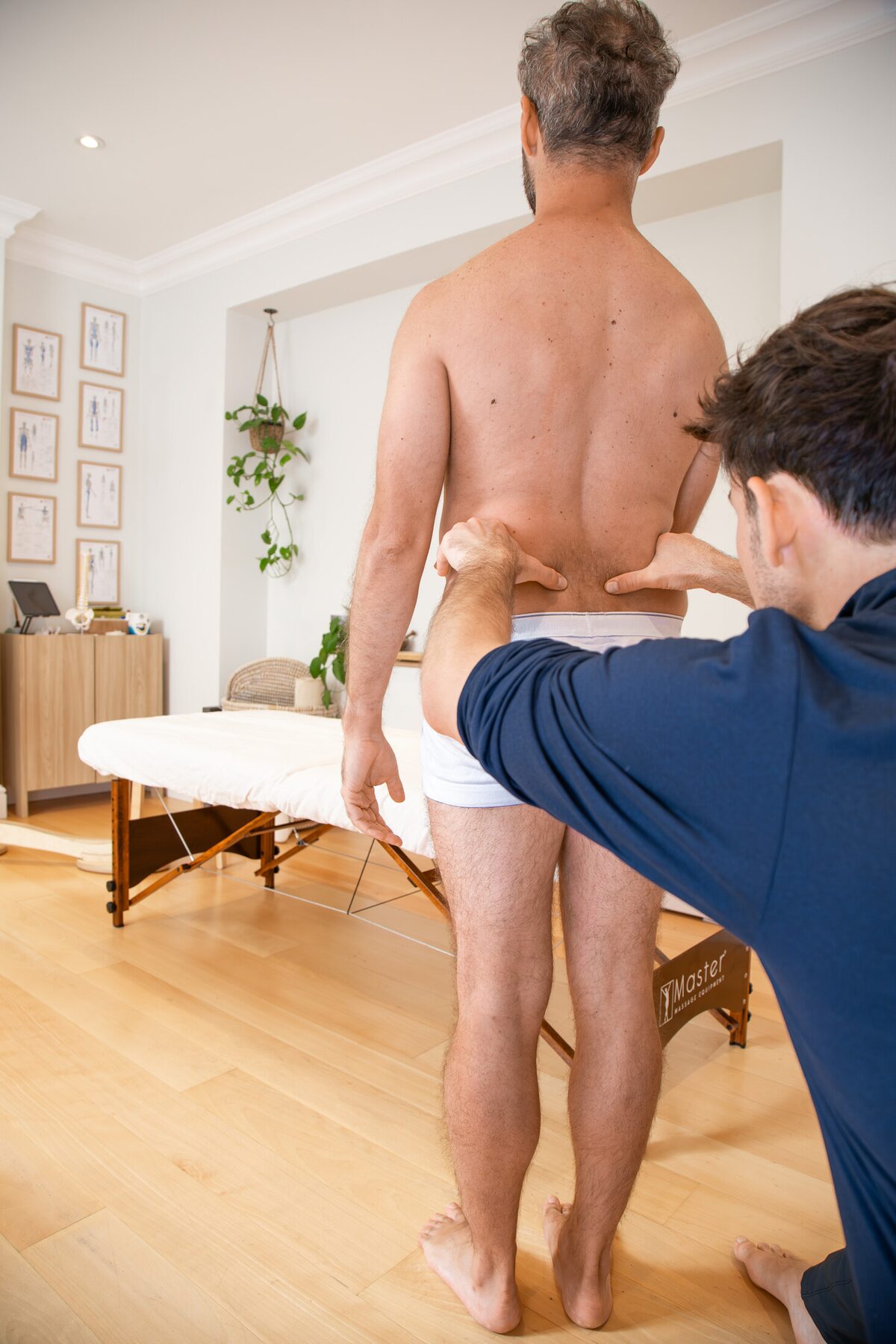
At the start of a session, we will usually look at how you are standing and moving alongside what you are noticing in your own body. This may include areas that feel restricted, differences between sides, or patterns that become more apparent in movement.
Through BodyReading and simple movement, I observe how different regions relate and organise themselves, while your own experience remains an important part of what guides the work.
From this, we establish an intention together. It may be quite specific or relate to a broader pattern of support and organisation. Anatomy Trains gives the work a clear structure, but never a rigid formula; the strategy develops in response to you and what becomes apparent as we work.
During a session
A session combines hands-on fascial work, movement and ongoing reassessment.
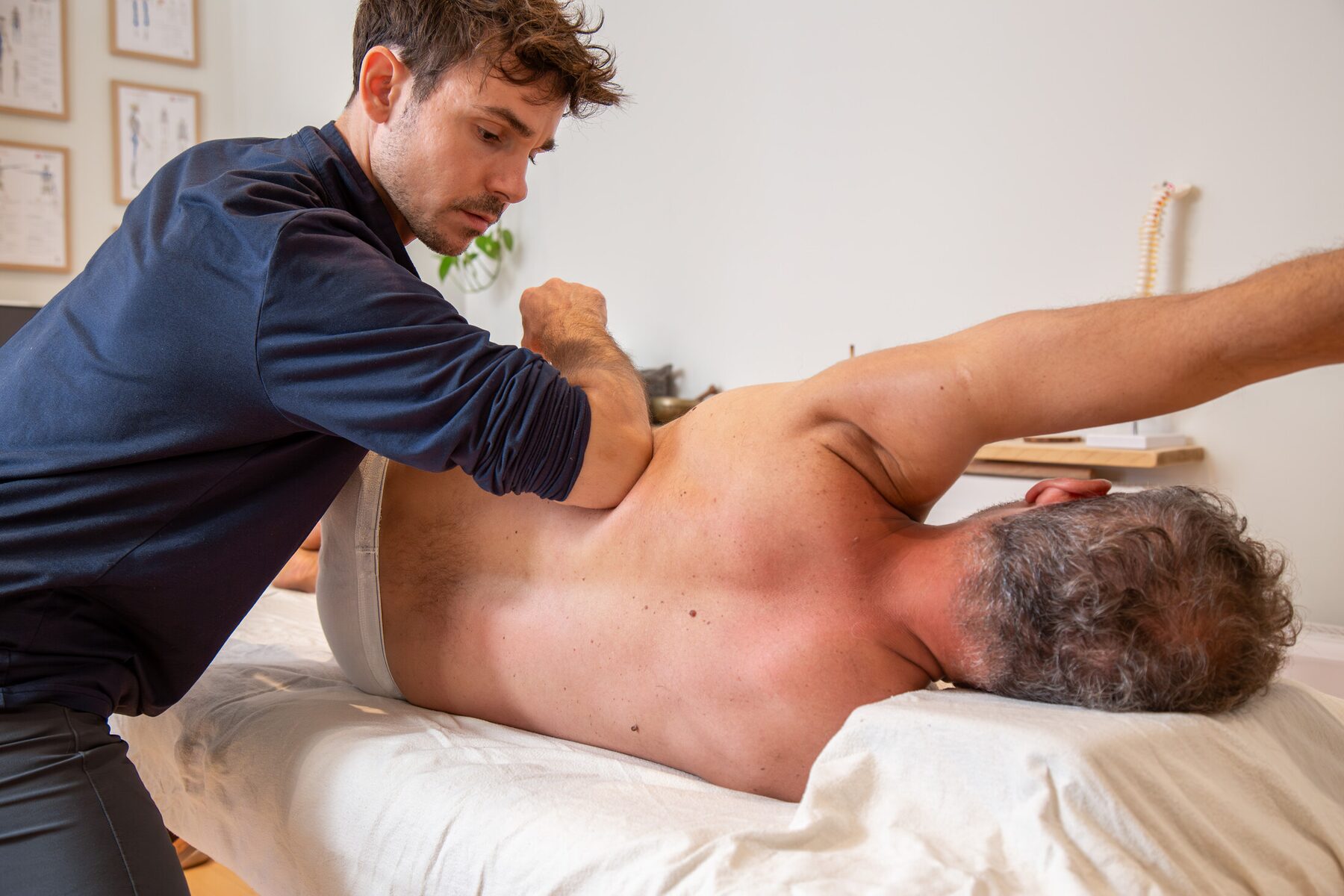
The hands-on work is precise and responsive. You may be lying down, seated, side-lying or occasionally standing, depending on what best serves the intention of the session.
At times, I may ask you to make small active movements while I am working. This allows you to participate in the change and explore it from within, rather than simply receiving the work passively.
We may return to standing, walking or a particular movement as the session unfolds. This gives us a way of noticing together how the work is translating into weight-bearing and movement, and whether the original intention has shifted.
Sessions are usually 90 minutes. Occasionally they may run a few minutes longer or finish slightly earlier. The emphasis is on completing the work needed for that session rather than working rigidly to the clock.
Ways of working
Single session
A single session is a complete experience in its own right. It may suit you if you would like to encounter the work before deciding whether to continue, or if there is a particular restriction or movement pattern you would like to explore.
For some people, one session is enough for what they are looking for. For others, it becomes the beginning of a longer process.
Three-session introduction
The three-session introduction offers more continuity than a single session, while remaining a complete process in itself.
Each session is informed by what became apparent in the one before, giving us time to follow the relationships that emerge and to explore how change is integrated through movement.
It is not a compressed version of the twelve-session series, but a meaningful introduction to how Structural Integration can develop over time. It can be a useful choice if you want to work more comprehensively without yet undertaking the complete series.
Twelve-session series
The twelve-session Anatomy Trains Structural Integration series is the complete expression of the method.
Each session has its own structural intention and area of emphasis, while contributing progressively to the greater process of addressing the individual patterns and structural deviations that are unique to you.
The earlier sessions generally begin with more superficial relationships in the body, before the work gradually moves towards deeper relationships and later towards integration.
This gives the series a clear progression without turning it into a checklist of anatomical regions. Two people may follow the same overall framework while experiencing very different sessions, because the emphasis, pacing and hands-on strategy are continually adapted to the individual.
Its value lies in this continuity: there is time to work through multiple layers and relationships, and to observe how the body responds and reorganises as the process unfolds.
It is also a defined process, with a beginning, a progression and an end. Structural Integration is not intended to become an indefinite course of weekly treatment. Once the series is complete, there is value in allowing time for the work to settle and for the body to integrate what has changed. Further sessions can be useful later where there is a clear reason for them, but they are approached as occasional follow-up work rather than an automatic continuation of the series.
Integration and change over time
Structural Integration is not about placing the body into a fixed idea of correct posture.
The intention is to create more options.
This may mean a greater sense of support, more freedom in a particular movement, clearer awareness of how you organise yourself, or less effort within patterns that previously felt habitual or constrained.
Some changes are apparent during the session itself. Others become clearer over the following days as you move, train, work or simply notice yourself differently.
The aim is not permanence in a fixed position, but a body that is better able to respond: with greater adaptability and a more coherent relationship between structure and movement.
Practical details
Structural Integration sessions are usually carried out in simple undergarments so that posture, body contours and movement can be observed clearly. Running shorts, briefs, a sports bra or similar simple clothing work well. It is best to avoid complex straps or heavy padding.
Structural Integration can also sit alongside other forms of care, including physiotherapy, osteopathy and movement-based work.
Where appropriate, and with your agreement, communication with another practitioner can be useful in helping to align intentions and avoid working at cross-purposes.